Loading...
First Round of Abstract Submission Ends: Mar 28, 2027
Extended Early Bird Ends: Dec 28, 2026

Plenary Speakers

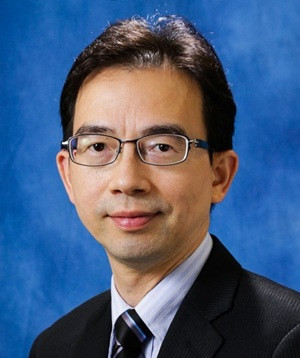
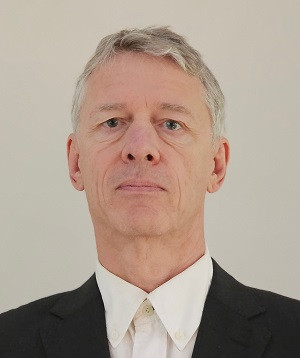
Prof. Wei-Hsin Liao
The Chinese University of Hong Kong, China
Title: Smart Materials, Adaptive Structures and Intelligent System
Wei-Hsin Liao received his Ph.D. in Mechanical Engineering from The Pennsylvania State University, University Park, USA. Since August 1997, Dr. Liao has been with The Chinese University of Hong Kong, where he served as Chairman of the Department of Mechanical and Automation Engineering from August 2018 to July 2024. He is currently Choh-Ming Li Professor of Mechanical and Automation Engineering and Director of Institute of Intelligent Design and Manufacturing. His research has resulted in over 500 technical papers and 30 patents, including nine journal papers that received Best Paper or Top Cited Paper Awards from ASME, IMechE, and IOP Publishing. Dr. Liao was the Conference Chair for the 20th International Conference on Adaptive Structures and Technologies (2009) and Conference Co-Chair for Active and Passive Smart Structures and Integrated Systems at SPIE Smart Structures/NDE (2014 and 2015). He received the 2020 ASME Adaptive Structures and Material Systems Award and the 2018 SPIE SSM Lifetime Achievement Award in recognition of his outstanding contributions to the advancement of smart structures and materials. He is also the recipient of the 2023 ASME Leonardo Da Vinci Award for eminent achievement in machine design. Dr. Liao currently serves as an Associate Editor for the Journal of Intelligent Material Systems and Structures and on the Executive Editorial Board of Smart Materials and Structures. He is a Fellow of the American Society of Mechanical Engineers (ASME), the Institute of Physics (IOP), and The Hong Kong Institution of Engineers (HKIE), and he has been awarded the Hong Kong RGC Senior Research Fellowship.
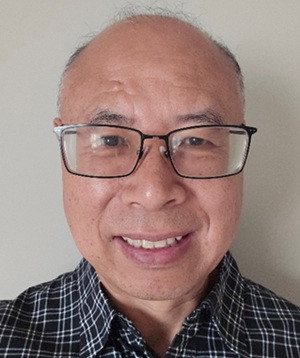
Prof. Zhuming Bi
Purdue University Fort Wayne, USA
Title: Theory of Open Manufacturing (TOM) - Digital Technologies and AI for Sustainable Enterprises
Zhuming Bi is a Professor in the Department of Mechanical Engineering at Purdue University Fort Wayne and holds the Harris Chair in Wireless Communications and Applied Research. He is a Fellow of the Institution of Engineering and Technology (FIET) and served as the 2023–2024 Fulbright–Nokia Distinguished Chair in Information and Communications Technologies. Dr. Bi has more than 35 years of research and teaching experience at academic, research, and industrial institutions worldwide. He began his academic career as an Associate Professor at Nanjing University of Science and Technology (1994–1998). He subsequently conducted guest research at City University of Hong Kong (1997–1998), Nanyang Technological University (2001), and Simon Fraser University (2002). His professional experience also includes roles as a Research Officer at the National Institute for Integrated Manufacturing, Canada (2003–2007); Project Manager at the Northern Ireland Technology Centre (NITC), United Kingdom (2008); and Senior Manufacturing Engineer at the National Institute of Standards and Technology (NIST), USA (2016). Dr. Bi has published more than 10 books and 220 peer-reviewed journal articles and has an H-index of 57 according to Google Scholar.

Dr. Bi will introduce Theory of Open Manufacturing Theory (TOM), a holistic framework that connects sustainability, digital intelligence, and collaborative innovation across the entire lifecycle of products and systems. The presentation explores how emerging technologies such as digital twins, knowledge-based engineering, reconfigurable manufacturing, manufacturing-as-a-service, big data analytics, and lifecycle management are transforming traditional factories into open, connected, and adaptive industrial ecosystems. Rather than viewing manufacturing as a series of isolated activities, Open Manufacturing treats it as a dynamic network where people, machines, information, and resources work together to create sustainable value. Through real-world examples and a future-oriented vision, the talk demonstrates how open manufacturing can improve decision making, accelerate innovation, support circular economy principles, and balance economic growth with environmental and societal needs. The proposed theory offers researchers, engineers, business leaders, and policymakers a practical roadmap toward the next generation of intelligent and sustainable manufacturing systems.
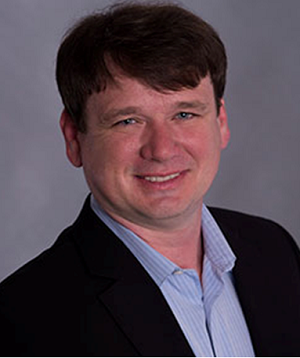
Prof. Gustaaf Jacobs
San Diego State University, USA
Title: High-fidelity simulations and machine learning
Professor Jacobs received a M.Sc. in Aerospace Engineering from the Delft University of Technology in 1998, where after graduation, he was appointed to a Research Associate. He received a Ph.D. in Mechanical Engineering from the University of Illinois at Chicago. Following graduation in 2003, he was appointed Visiting Assistant Professor in the Division of Applied Mathematics at Brown University. He later combined this position with a Postdoctoral Fellowship at the Department of Mechanical Engineering at the Massachusetts Institute of Technology. As of 2006 he was appointed Assistant Professor of Aerospace Engineering at San Diego State University and was promoted to Associate Professor in 2010 and Full Professor in 2014. In 2001 he received the Provost’s Award for Graduate Research at the University of Illinois at Chicago. In 2002 he was awarded a University Fellowship at the University of Illinois. He received an AFOSR Young Investigator Award in 2009. He became an Associate Fellow of AIAA in 2013. The research interests of Professor Jacobs can broadly be defined in area of computational multiphase, and multiscale flow physics using high-order methods. Emphasis is on simulation and analysis of particle-laden flows and flow separation in complex geometries, to aid flow control relating to combustion optimization and drag reduction.
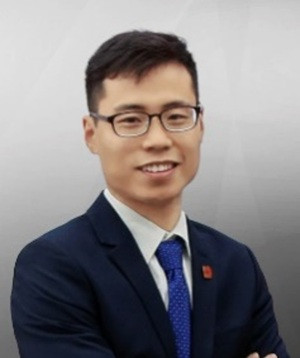
Prof. Tao Ma
Shanghai Jiao Tong University, China
Title: From Lab to Building: Technology Translation of High-Efficiency Colored PV Facades and Semi-Transparent PV Windows
Prof. Tao Ma is a Full Professor at Shanghai Jiao Tong University and Associate Dean of the School of Engineering at Tibet University. His research focuses on solar photovoltaic technologies, particularly building-integrated photovoltaics, PV thermal management, and renewable energy systems, covering fundamental research, technology development, and engineering applications.

He has led more than 18 research projects funded by MOST, NSFC, and other governmental and industrial organizations. He has published over 150 journal papers, including 16 ESI Highly Cited Papers and 2 ESI Hot Papers, with more than 16,000 citations and an H-index of 69.

He has been recognized as a Clarivate Highly Cited Researcher, Elsevier Highly Cited Chinese Researcher, and one of the World’s Top 2% Scientists. He is also actively engaged in university technology transfer and commercialization of advanced PV technologies through industry collaboration, startup development, and engineering demonstration. He serves on the editorial boards of Applied Energy, Solar Energy Materials and Solar Cells, and Photovoltaics.
Prof. Matthias Meinke
RWTH Aachen University, Germany
Title: Title to be confirmed
Dr. Matthias Meinke earned his Diploma in Aerospace Engineering from RWTH Aachen University, Germany. Following this, he joined the Institute of Aerodynamics at RWTH Aachen University as a research assistant under the guidance of Prof. E. Krause. In 1993, he completed his Ph.D., presenting a dissertation focused on the Numerical Solution of the Navier-Stokes Equations for Unsteady Flows using the Multigrid Method.
Afterward, Dr. Meinke took on the role of head of the CFD department at the Institute of Aerodynamics and began teaching Computational Fluid Dynamics in both Bachelor’s and Master’s programs at RWTH Aachen University. He has extensive experience in various fields including aerodynamics, turbulence, aeroacoustics, turbomachinery, multiphase flows, and the development of advanced numerical methods.
For many years, Dr. Meinke and his team have been developing a multiphysics software framework specifically designed for high-performance computing systems. This framework is utilized in numerous national and European projects. To date, he has published more than 190 peer-reviewed journal articles, his h-index is 46.
Researchgate (https://www.researchgate.net/profile/Matthias-Meinke)
Google Scholar (https://scholar.google.com/citations?user=Lcb7t7AAAAAJ)

Academic Service:
He has reviewed project applications for the DFG (German research society), Humbold foundation and Dutch NWO. He has reviewed papers for numerous international journals He serves on the NHR4CES Resource Allocation Board and contributes to the NHR4CES Simulation and Data Lab for fluid mechanics.

Awards and Honors
He received the Borchers Medal (Borchers-Plakette) from RWTH Aachen University in 1993 and was awarded the title RWTH Lecturer in 2015 in recognition of his teaching activities.